Sars hands more than 100 cases linked to commissions of inquiry to the NPA
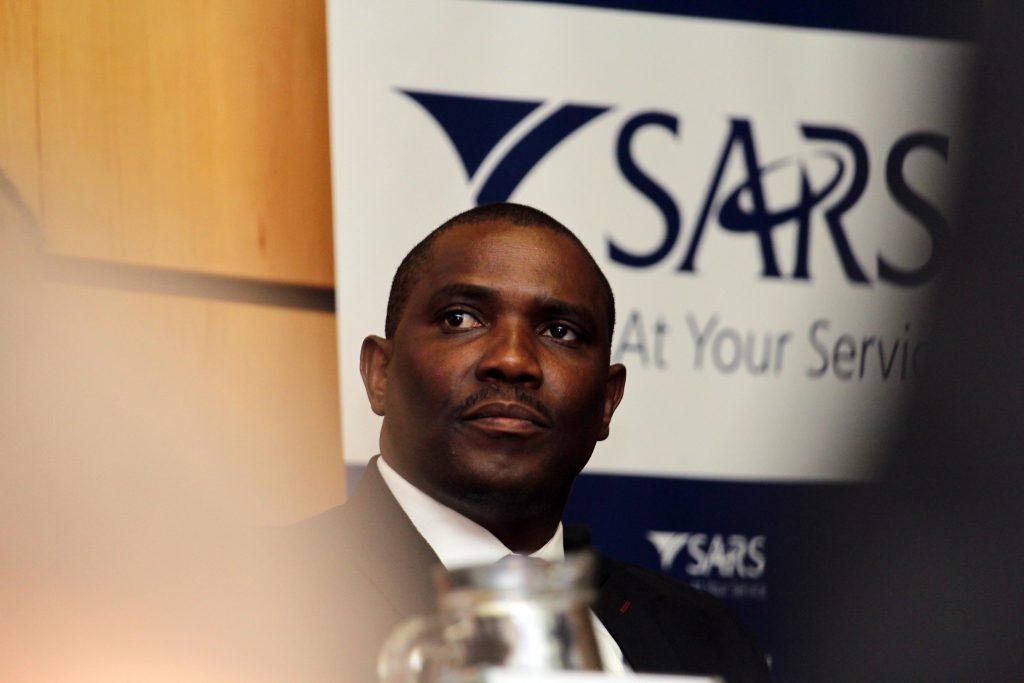
South African Revenue Service (Sars) Commissioner Dr Johnstone Makhubu says more than 100 cases involving people mentioned in commissions of inquiry – including the Madlanga Commission – have already been handed over to the National Prosecuting Authority (NPA) this year.
In many cases, Sars had had “its finger” on these people for some time.
Makhubu was speaking at the RMB Think Budget breakfast, held a day after the Medium-Term Budget Policy Statement (MTBPS) was presented in parliament.
Makhubu says he has met the head of the NPA, Advocate Andy Mothibi, over coffee twice to urge faster investigations, and that the two entities are working together.
He points out that investigators who pursue tax evasion and criminal activity, sometimes at considerable risk to their lives, become frustrated when cases do not result in prosecutions, and suggests the NPA could have a backlog of about 1 000 tax-related cases.
“If you’ve got 1 000-plus cases that are sitting in a backlog with [the] prosecution, it does not mean that the tax administration has not done its work. It has done its work …”
Technology to tackle illicit economy
Sars is also stepping up efforts to tackle the illicit economy, including the sale of cigarettes and alcohol without the payment of excise duties.
Makhubu says whether the annual tax loss amounts to R100 billion or R200 billion, the figure is unacceptably high.
By the end of the calendar year, Sars plans to issue a tender for a technological solution to help it track products subject to excise duties and identify illicit trade.
This includes alcohol, cigarettes and pharmaceuticals, as well as products subject to the Health Promotion Levy on Sugary Beverages.
Sars is also in discussions with the South African Bank Note Company, a subsidiary of the South African Reserve Bank, to develop a marker that is comparable to or better than the technology used to authenticate banknotes, for use on products on which excise is paid.
“Once you have the marker, you must be able to distribute it to manufacturers in controlled environments,” he says.
“It must be applied in the production line. It must be scanned in the production line. The information must go to the tax administration.”
This would help Sars identify products that have not been manufactured by tax-compliant producers, as well as cases where manufacturers fail to pay tax on all their output or divert some products to the illicit market.
“We are looking for somebody to manage this entire ecosystem in partnership with us now … What’s going to be important is the understanding that this solution hinges on the synthesis of the people, the data, and the technology.”
Makhubu notes that some companies keep two sets of financial books: one for Sars and another reflecting their actual finances.
Sars installed counters at tobacco manufacturers in 2021 to monitor how many cigarettes are produced, but these were tampered with. It is now looking for alternative technology.
Makhubu says some tobacco companies had taken legal action to prevent cameras from being installed on their premises.
The tobacco and alcohol industries have long argued that high excise duties encourage illicit trade by driving consumers towards cheaper, untaxed products.
In April, the government launched the National Illicit Economy Disruption Programme, a multi-agency initiative aimed at combating illicit trade.
Makhubu says government agencies need to work together to address the problem, describing the illicit economy as “very complex” and “well organised, mirroring the formal economy”.
He adds that 19 of the 31 companies licensed to manufacture tobacco products are being audited to ensure compliance, although this does not mean all of them are involved in illicit trade.
Strengthening its workforce
Makhubu says Sars must recruit more young staff to address its ageing workforce, with many employees increasingly “on the wrong side of 50”.
It must also invest in training, even if this increases staff costs.
He says short-term budget allocations make it difficult for Sars to offer skilled forensic investigators the long-term job security they need.
Makhubu adds that Sars had used artificial intelligence to prevent incorrect Vat refunds worth R61 billion.
Listen to Ryk van Niekerk’s interview with Sars Commissioner Johnstone Makhubu about SA’s improved revenue outlook (or read the English-translation transcript here):
You can also listen to this podcast on iono.fm here.
Google News
Follow our coverage
Newsletters
Get news in your inbox
Social Media
Join the conversation
TAGS: AI | alcohol | Illegal cigarettes | illicit trade | Johnstone Makhubu | Madlanga Commission | MTBPS 2026 | npa | Sars modernisation | sin taxes | vat refunds