LVMH’s China slump threatens hopes for broader luxury recovery
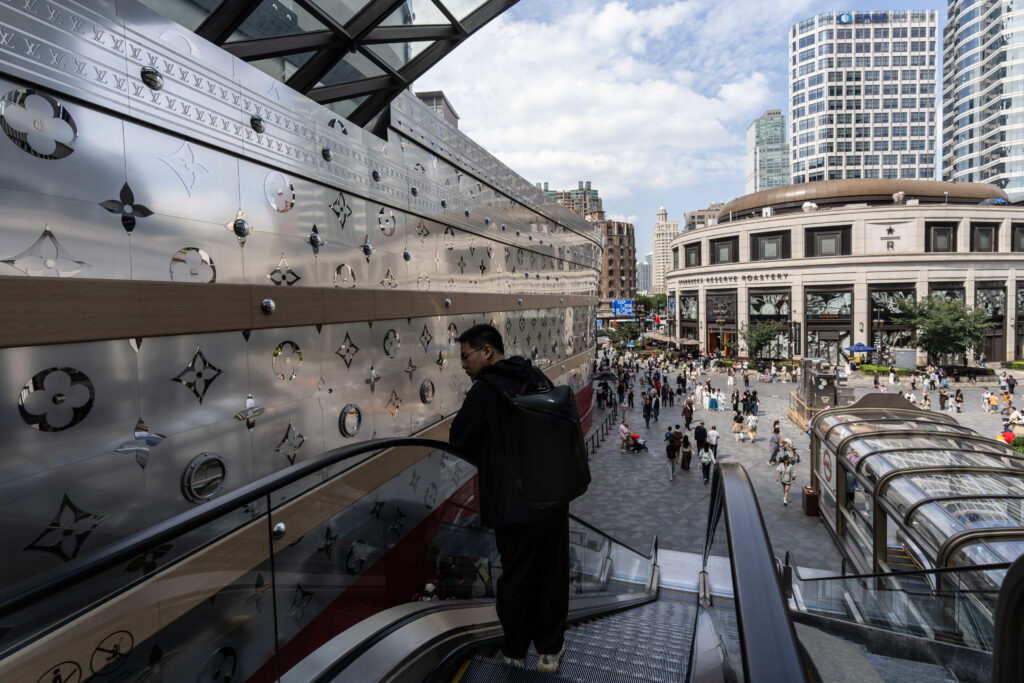
LVMH Moët Hennessy Louis Vuitton SE offered a closer look at the deepening Chinese luxury slump this week, revealing that sales on the mainland dropped by double digits in the third quarter while the traditionally high-spending consumer group also pulled back overseas.
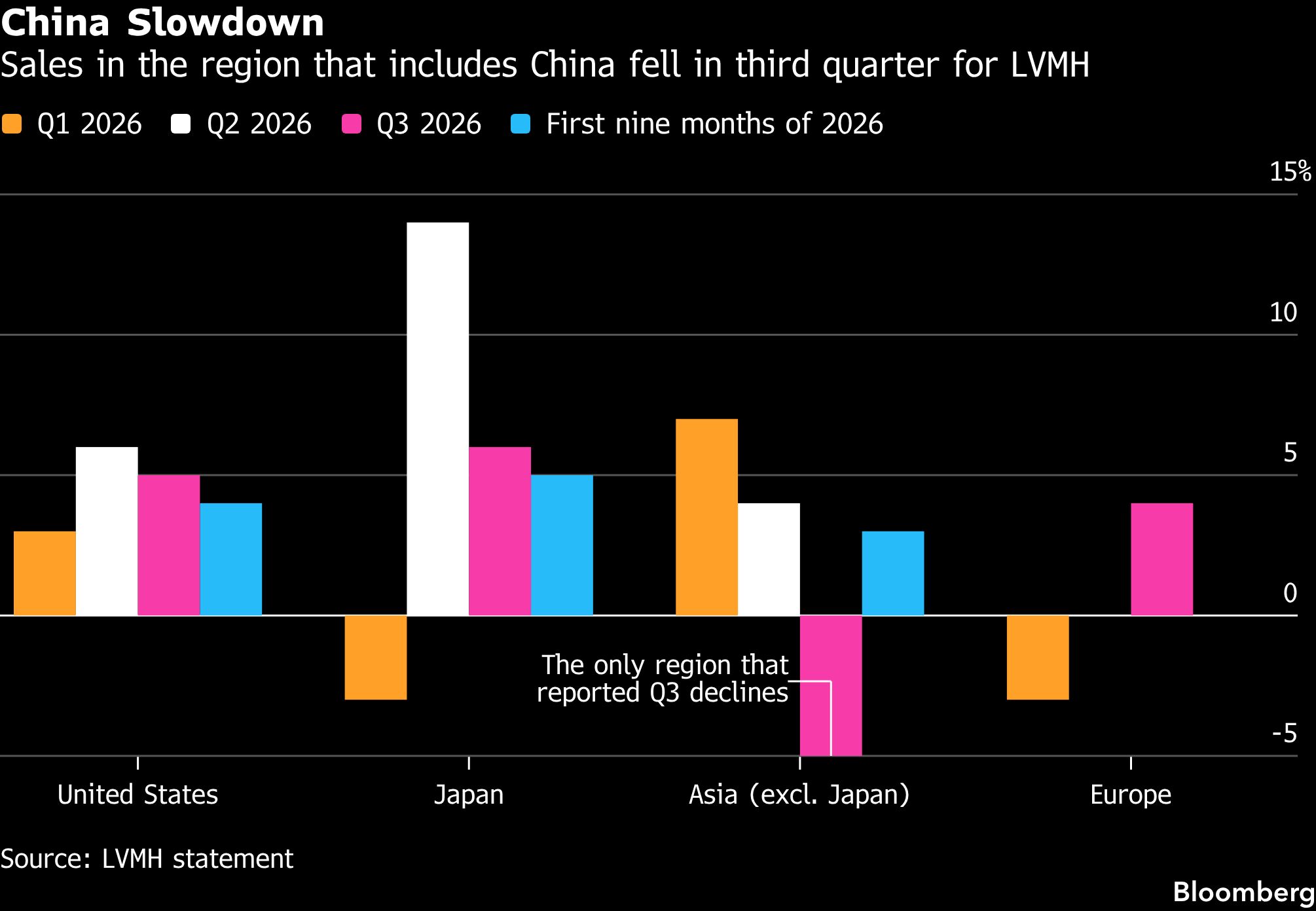
The weak spending contributed to a 5% drop in organic revenue in the Asia excluding Japan segment, the only region where the luxury giant saw a year-on-year decline. Chinese shoppers’ purchases overseas declined by a mid-single-digit percentage, while overall demand improved later in the quarter ending September 30, Chief Financial Officer Cecile Cabanis told analysts on a call.
The China slowdown at LVMH, long seen as an industry bellwether, adds to doubts about the durability of a broader luxury recovery and could offer a worrying signal for rivals including Yves Saint Laurent owner Kering SA and Hermès International SCA, which are due to report earnings later this month. China had helped fuel an industry rebound less than a year ago, but worsening economic sentiment is again weighing on high-end spending.
“The news flow has not been particularly good in China in the summer,” Cabanis said. “So this has really weighed on the feel-good factor and created a short-term subdued Chinese backdrop.”
Luxury demand in China is being squeezed on numerous fronts. Consumer wariness amid a broader economic slowdown is restraining spending at home and pushing some shoppers toward cheaper local brands. At the same time, recent stock-market weakness and tougher taxation of overseas wealth are weighing on some of the country’s richest consumers.
“Everybody’s having a tough time,” said Jacques Roizen, co-founder of Shanghai-based consultancy Foresight Performance Partners. “LVMH as a portfolio of scale is such an industry index, and the other luxury listed companies are not going to significantly outperform that.”
Louis Vuitton also faced public backlash after a trademark dispute with local tea chain Molly Tea stirred criticism in China during the quarter, adding to pressure on LVMH’s biggest label. Cabanis said that while it was difficult to quantify the impact, the consumer pushback hurt Louis Vuitton at least at the beginning of the period.
The setback in China comes as the broader luxury recovery faces pressure from conflict in the Middle East and cost-of-living concerns that are curbing discretionary spending globally.
That pressure is already showing across the luxury sector. Sales at the 25 biggest luxury labels in China dropped more than 10% in July, Bloomberg reported earlier. That threatens to derail a recovery that began less than a year ago, when a stock market boom fuelled by artificial intelligence helped revive luxury spending.
LVMH’s renewed gains in revenue and earnings per share this year “grew precarious” as China’s slowdown deepened in the third quarter, Bloomberg Intelligence analysts Deborah Aitken and Karine Pitton wrote.
“There was a shift in the Chinese consumer backdrop, and this forces us to sharpen our self-help effort,” CFO Cabanis said. “We need to do more, but we have not stopped investing in China.”
© 2026 Bloomberg