Stanlib’s Giles Heeger on three international trends affecting markets
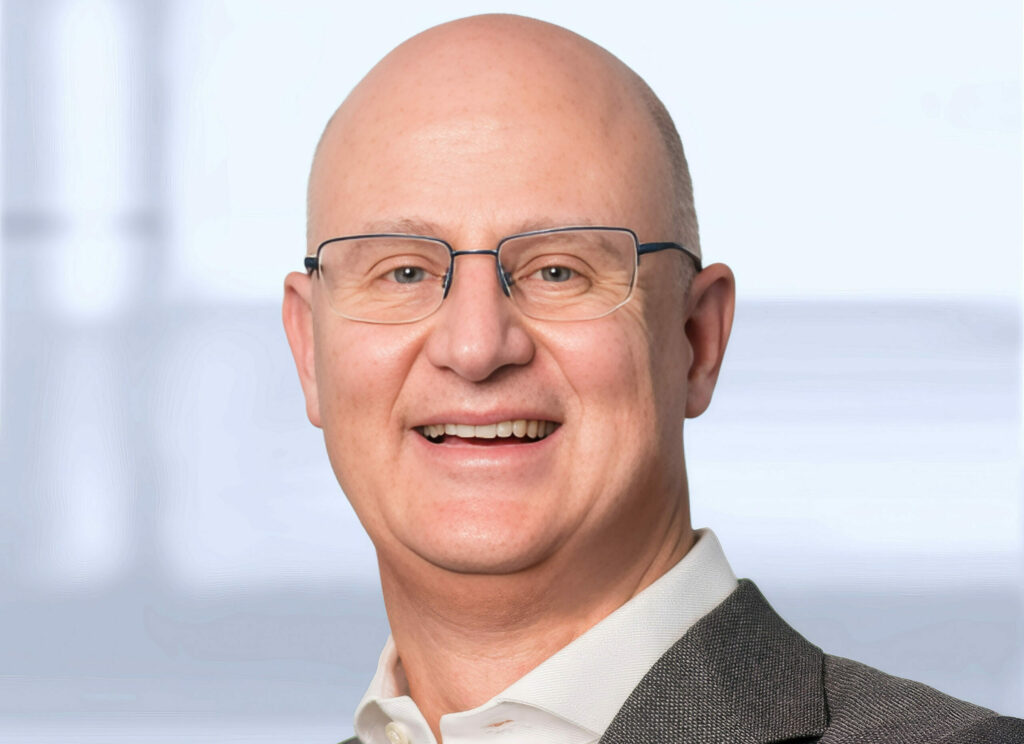
The rise in AI stocks does not appear to be a bubble, international investors sometimes rate South Africa’s fundamentals more highly than locals do, and global markets are doing well despite the rise in instability.
These are three takeaways from Moneyweb’s interview with Stanlib’s South African chief executive Giles Heeger, who discussed the recent Stanlib conference hosted along with its international partner JPMorgan Asset Management.
Read: The only billionaires making money this year are in tech
The conference aimed to help finance professionals and institutional clients better understand global market dynamics and geopolitics, among other topics.
Even if a pension fund has the maximum permitted 45% allocation to offshore investments, between 60% and 80% of a local portfolio can still be exposed to international events, says Heeger.
This is one of the reasons the conference examined global trends and their impact on markets.
Here are three key trends.
1. The world is becoming more unstable, but markets are holding up
Quoting General Sir Nicholas Patrick Carter, a retired senior British Army officer who served as Chief of the Defence Staff from 2018 to 2021 and has spoken at the conference for two consecutive years, Heeger recalled Carter’s assessment at the previous summit that 2024 had seen more conflicts worldwide than any year since 1945.
Heeger says this year’s message was that global instability had increased further.
Iran’s regime is becoming more hardline and militarised, he says, while Yemen remains unstable. Given Yemen’s geographical position, the conflict is spreading beyond the Middle East towards the Horn of Africa.
Additionally, Russia and Iran are also collaborating on technology, linking the war in the Middle East with Russia’s war against Ukraine.
Yet financial markets do not appear to reflect the growing global instability. Why?
“It is kind of an esoteric question,” says Heeger. One of the conference speakers suggested that increased instability was prompting countries to spend more on defence, energy and self-sufficiency, reducing their dependence on global supply chains.
“Together with the AI expenditure, [the extra spending] has given markets the tailwinds that they’ve seen.”
2. AI returns could broaden to companies that harness its potential
Many in the financial world are asking whether AI stocks are in a bubble.
The concern is that shares linked to AI may be overvalued, with prices exceeding what their earnings and cash flows can justify. If a bubble has formed, a correction would be expected with a drop in the prices of some tech stocks.
Read: AI bubble risks worst S&P 500 crash since 2008, strategist says
Heeger says Stanlib’s investment team has examined the issue closely but has yet to find evidence of a bubble.
“What I said to somebody else recently is, if a lot of your economy is concentrated in a single place and a lot of your capital investment is concentrated in a single place, then inevitably the nature of humans is that the fly-by-nights get attracted into that space and it becomes a riskier place.”
However, he says Stanlib has not identified any clear missteps so far; it “can’t see any evidence yet of any actual misstep”.
Heeger says one of the conference speakers argued that the world is moving from AI development to adoption. This means shifting the focus beyond investment in data centres to whether businesses and individuals will actually use AI, and whether that adoption will translate into greater productivity.
The implication is that returns could increasingly come from companies deploying AI, rather than only from those developing the technology or supplying the infrastructure behind it.
Heeger expects investment returns to broaden beyond shares such as Nvidia to include companies in sectors such as financial services, manufacturing and consumer goods.
3. International investors view the rand relatively favourably
Another message from the conference is that South Africa compares favourably with several other countries when investors assess financial indicators and government bond markets.
“The sort of thing that an international investor looks at, we [South Africans] gloss over,” says Heeger.
South Africans tend to focus on day-to-day concerns, such as the Madlanga Commission, street lights and potholes. Foreign investors and buyers of government debt, however, are more likely to assess whether the country has a credible central bank with a strong track record of adhering to its mandate.
South Africa scores well on this measure, says Heeger.
Listen/read: Investment, not regulation, will drive growth – Kganyago
Other considerations include whether government borrowing is under control and whether the state is collecting taxes effectively by international standards. South Africa also compares reasonably well on these measures.
Heeger adds that a slight weakening of the US dollar around the country’s midterm elections could make South Africa relatively more attractive to foreign investors.
“So if lots of global investors act on those screening metrics, that ends up being good for the rand.”