‘Every rand has a name’: Dlamini defends PIC’s R3.6trn stewardship
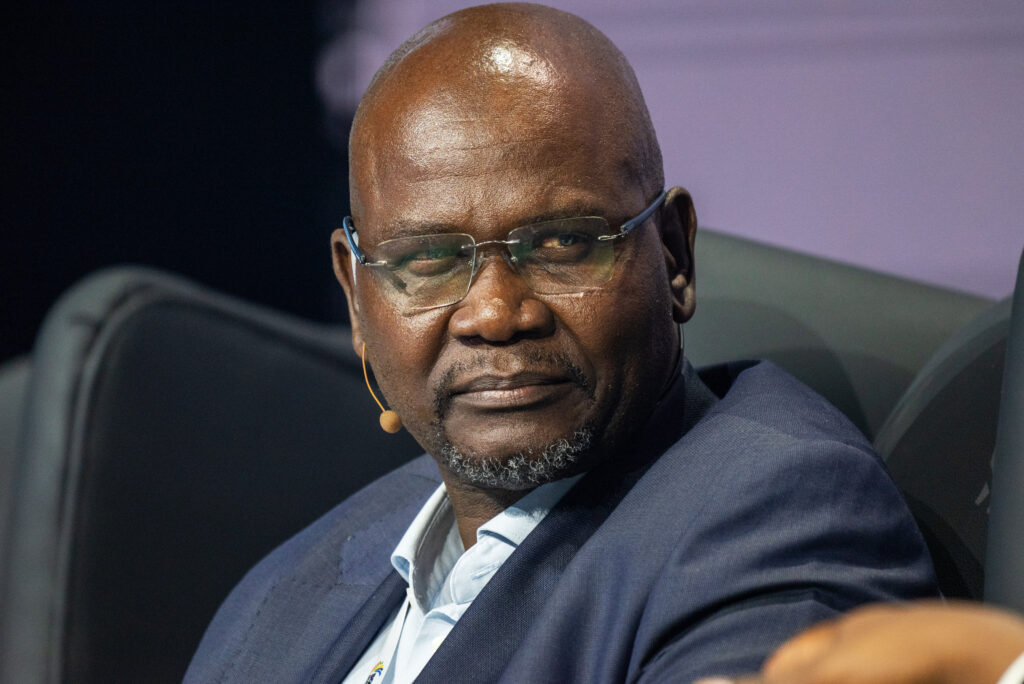
Fresh from being reinstated as Public Investment Corporation (PIC) CEO after a court set aside his suspension, Patrick Dlamini used the asset manager’s annual results presentation on Wednesday to stress that the nearly R4 trillion it manages is not a honey pot for misuse.
“Let me remind us all, the trillions of rands may seem unreal to most South Africans. But every rand has a name. Every rand has a job to do,” he declared to the room in Sandton, Johannesburg.
“These rands do not belong to the PIC; they belong to South Africans that have worked to build this country.”
Read:
PIC seeks private fixers after governance meltdown
PIC’s governance crisis is self-inflicted – Mavuso
The PIC is a state-owned firm that manages investments worth R3.66 trillion (as at 31 March 2026) on behalf of its clients – the biggest being the Government Employees Pension Fund (GEPF).
The PIC invests the pension savings of more than one million current and retired public servants to generate a return so that the GEPF can pay their retirement benefits.
It also manages investments for other social funds, including the Unemployment Insurance Fund and Compensation Fund.
“Every rand belongs to someone who deserves to be confident in how we manage their money,” Dlamini said. “Our clients deserve better, and we have an obligation to ensure that our clients’ money is treated as sacrosanct.”
Governance issues
This reminder comes at a testy time for the PIC, which is still recovering from increased public scrutiny after Dlamini was suspended in July for nearly three weeks following a dust-up with the previous board, led (at the time) by Deputy Minister of Finance David Masondo.
Read:
PIC CEO Patrick Dlamini suspended amid whistleblower allegations
PIC CEO back at work three weeks after being suspended
Masondo placed Dlamini on precautionary suspension following unsubstantiated claims of wrongdoing by a whistleblower concerning a controversial R430 million transaction with a firm called Acapulco and alleged conflicts of interest involving Lanseria International Airport.
Dlamini successfully overturned his suspension in court, leading to his reinstatement – and the board led by Masondo was forced to resign by Finance Minister Enoch Godongwana.
Read:
Masondo reassures PIC staff amid governance turmoil
Masondo out – deputy finance minister quits as PIC chair
Dlamini has described the past year as “not being easy”, while Masondo in an annual report commentary accompanying the PIC results was more withering, saying the period “saw an escalation in public attacks against the PIC”.
Annual results
Despite the ructions within the corridors of the PIC, the company unveiled robust performance in its underlying investment portfolio in its annual results for the year to 31 March 2026.
Its total assets under management grew by 19.94% or R608 billion, to close the financial year at R3.66 trillion.
That figure had been close to surpassing the R4 trillion mark at the end of February.
PIC acting chief investment officer August van Heerden said the sell-off in the market spurred by the war in Iran resulted in about R400 billion of the value of its underlying portfolio being wiped out.
The portfolio has considerable exposure to the JSE and local equities, accounting for about 47.1%, with the balance comprising local bonds, cash, property (listed and unlisted), offshore equity and bonds, and other asset classes.
Any ructions or sell-off on the JSE would be expected to impact the PIC’s portfolio – and it did; not only in the year under review, but over the past three years.
Underperformance
The PIC’s five largest clients narrowly missed their three-year benchmark, recording an annualised return of 15.04% against a target of 15.28% – an underperformance of 0.24%.
This was mainly due to the GEPF’s ongoing shift from local equities to global managers leaving the portfolio temporarily overweight in low-earning cash and underweight South African shares.
There are also pressure points in the PIC’s unlisted portfolio.
This portfolio comprises property investments and the Isibaya Fund, which allocates funding mainly into black-owned businesses and transformation initiatives.
The Isibaya Fund has historically allocated funding to politically-connected individuals, some of whom featured largely at the Mpati Commission of Inquiry into allegations of impropriety at the PIC.
The PIC’s unlisted investments (excluding property) were supposed to earn at least 6.95%, but instead its annual return came in at -0.2% because some assets had to be written down.
However, once investments that have already been sold are included, the portfolio returned R1.23 for every R1 invested.
The PIC’s unlisted property portfolio was measured against an MSCI RE (real estate) benchmark adjusted for the PIC’s client mix. It underperformed that benchmark by 5 percentage points over a 36-month review period.
Read: New twist in dispute between GEPF and PIC over property transaction
The indirectly held portfolio (heavily weighted to retail) missed its three-year target by under 1%, while the directly held portfolio (heavily weighted to offices) underperformed its benchmark and was the main drag.
Some PIC assets remain distressed
Alongside other impairments, the Auditor-General of South Africa identified two material irregularities involving likely financial losses of:
- R176 million (insufficient due diligence), and
- R83.2 million (inadequate monitoring).
“We are working flat out to ensure that distressed assets can be turned around,” said Dlamini.
Listen:
How the PIC cost public servants R88bn
PIC responds to R88bn loss, explains unlisted investment mandate
“We do everything we can to make sure that happens. If we believe that there is someone who can take care of the assets, we will then have to take appropriate action … We are positive that some can be rescued. That is a process underway.
“We try to remind the public that non-performing assets are sometimes inherent.”