Why Capitec hiked loan impairments by R1bn
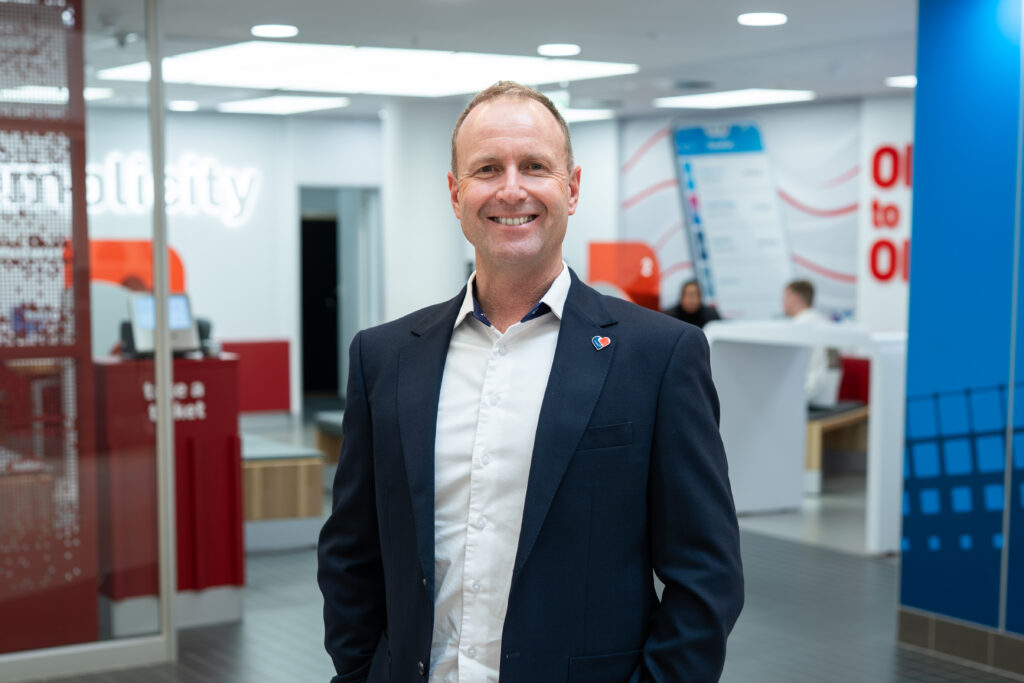
Capitec CEO Graham Lee admits that the more than R1 billion increase in the banking group’s credit impairments in the first half of its 2027 financial year could be “cause for concern” when viewed “out of context”.
Credit impairments across its personal and business banking units increased by 21%, while its credit loss ratio (annualised) was adjusted upwards to 8.4%, from 7.9% a year ago.
Lee maintains that “these are sensible numbers that indicate that we’re executing our business plan”.
He says there are four main underlying drivers of the numbers.
Higher economic risk
Firstly, Capitec deliberately raised its forward-looking macroeconomic provisions firmly.
Lee says this was a proactive move, and “not because of the experience that we’re having now but looking ahead to 12 and 18 months [from now], where we think the macro is going to be tougher”.
Read/listen:
‘Business banking is the biggest opportunity for us’ – Capitec
Capitec ups provisions as it braces for inflation, rate pressure
In its personal banking book, this forward-looking impact (FLI) was 70 percentage points, which was the main driver of that book’s credit loss ratio (CLR) increasing to 9.2% (from 8.1% in August 2025).
In business banking, this FLI overlay added 50 percentage points to see that book’s CLR move to 3.4% from 2.1% a year prior.
Growth in lending
The second impact is from the planned growth in Capitec’s loan sales and credit book.
“We have significantly grown our loan sales on our credit book and the implications of that in the short term is a large upfront provision,” says Lee.
“The book against which we’re holding our provisions is much bigger. That’s just successfully executing our strategy.”
Its personal credit book topped R100 billion for the first time (R101.7 billion), with a more diversified spread across products and durations than the term-loan-heavy book from five years ago.
Read:
Capitec: The ultimate reliable compounder
At that point (August 2021), term loans comprised 76% of the total, while now (August 2026), this has reduced to 56%.
Its access facility now comprises 21% of the total (14% five years ago), while credit card is 18% (from 10%). Purpose loans, ring-fenced for vehicle purchases, education, home improvements or medical purposes, make up the rest.
New unsecured loans
The third driver of this spike in impairments is a change in the mix following the introduction of scored unsecured loans in its business bank.
Historically, Capitec’s business bank (the predecessor of which was Mercantile Bank, which it acquired in 2019) would provide what the group refers to as “intuitive” lending, which is how all banks traditionally lend to business customers.
Lee says this typically requires an experienced expert who applies their mind to the specific circumstances of that business.
Capitec still uses this approach to its larger risks and exposures, but Lee makes the point that this doesn’t scale.
“You can’t do that a million times without a million [human decisions].”
Capitec has leveraged its processes, experience and knowledge in its personal banking unit to score business customers accurately and offer them loan products that are unsecured. These were launched in December 2025.
Here, it is also using an innovative collection method for these ‘pay-as-you-trade’ loans to collect small amounts daily instead of a single amount at month-end.
Read/listen:
Capitec clients ramp up credit use
Here’s why one in three adults in SA is active on the Capitec app
Karl Kumbier, executive for business banking at Capitec, acknowledges that these are, by definition, “a higher risk loan”.
However, he says the bank “price[s] for it”, meaning the “yield on those loans is much higher than what it is on our traditional intuitive book”.
In the six months to 31 August 2026, Capitec increased its credit loss ratio for business banking by 80 percentage points for these loans.
Kumbier says that on its traditional ‘intuitive’ book, the credit loss ratio of 1.5% is “exactly the same as last year, so it’s exactly the same quality”.
“In fact, the rolls into stage 2 and 3 are actually performing even better than we expected.”
Capitec saw a 10-basis point increase in the upfront charge (to 60 percentage points) simply because it grew its book faster than it had in the past. The bank books a provision on every new loan it writes.
Targeting small businesses
The final driver of the higher impairments, says Lee, is in its effort to serve the emerging economy. This is directly linked to the third driver – in other words, providing these unsecured loans to an entirely new market segment.
Think salons, spaza shops, vehicle repair outfits and food stands, all of which are currently one-person businesses.
“That’s brand-new business for us and we’re providing prudently whilst we grow and learn.”
Capitec says it has 26.6 million total active customers, an increase of 7% from August 2025. So-called ‘fully banked’ customers (10.4 million) are growing more quickly at 11%, with its businesses and entrepreneurs segment (686 000) more than doubling in the year.
Headline earnings for the six months increased by 19% to R9.5 billion, with a 21% jump in non-interest income including value-added services (to R16.1 billion) and a 7% increase in net interest income (to R12.7 billion).
Operating expenses were up only 5% to R10.5 billion.
Capitec share price
Read the Sens here.