Sapoa readies for another legal battle over ‘unconstitutional’ municipal rates and taxes
The South African Property Owners Association (Sapoa) is preparing to launch a legal battle against one of the country’s big metros over plans to use property values to determine what the municipal rates and taxes should be.
The official representative body and voice for the commercial and industrial real estate sector declined to name the metro as it is still drafting the legal papers.
But its concerns stem from what it has described as an unconstitutional move, similar to the decision taken by the City of Cape Town when it announced property value-linked levies and fixed charges.
Read:
Cape Town rates: ‘Pay back the money, Geordin!’
Cape Town accepts court ruling on rates-linked tariffs
Court rules Cape Town value-based tariffs and cleaning levy unlawful
At the time, Sapoa argued that linking service tariffs to property values effectively functions as an unlawful, disguised property tax that bypasses the Municipal Property Rates Act and violates Section 74 of the Municipal Systems Act.
Cape Town later repealed the decision.
New battle
Following that court victory, Sapoa president Itumeleng Mothibeli confirmed to Moneyweb that a second round is pending with another metro.
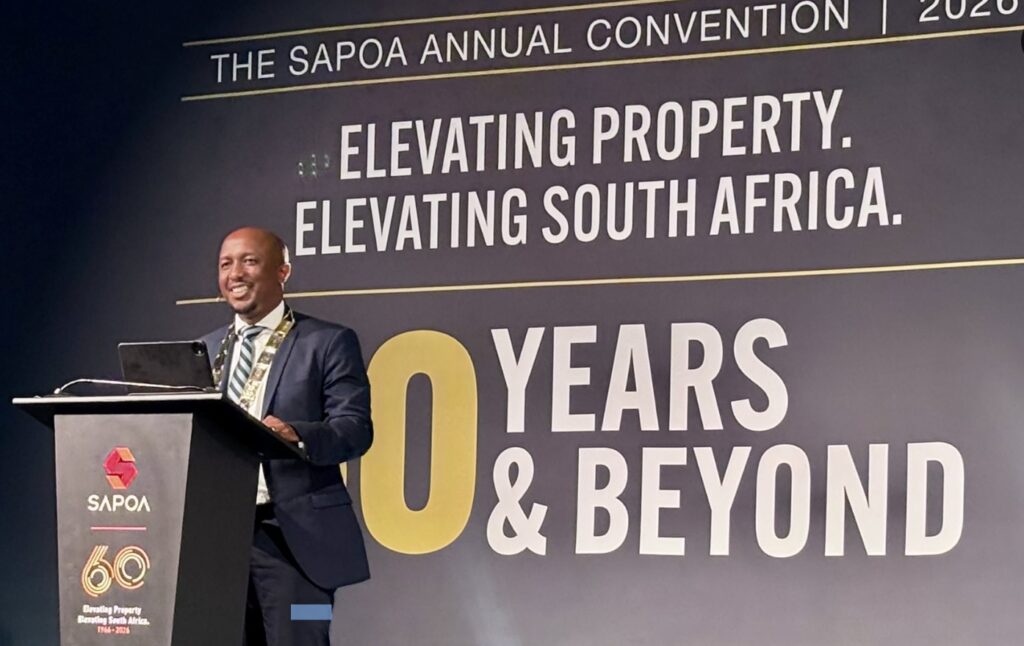
“We know it’s unconstitutional. In the judgment of the City of Cape Town it was proven to be unconstitutional and we will be pushing back against municipalities that want to do that,” Mothibeli told Moneyweb on the sidelines of Sapoa’s annual convention at Sun City in North West province on Wednesday.
The organisation marked its 60th anniversary at the three-day gathering.
“But we’re also extending our hand to say we understand the pressures, we can show you how we can do it in a legal way,” said Mothibeli.
Apart from the City of Cape Town, the Mangaung Metropolitan Municipality in the Free State is the only other metro on record as being cautioned by Sapoa – in Mangaung’s case about its recent plans to change the structure of its waste removal tariffs for non-residential customers and link it to the value of their property.
Read:
Sapoa warns Mangaung: Don’t link tariffs to property value
Sapoa challenges Mangaung valuation-linked tariff in court
The Sapoa board is set to meet soon, where this is among matters to be finalised.
Proactive approach
Sapoa’s clampdown on municipalities comes as industry leaders in the property sector have placed the dire state of municipalities at the centre of what they believe remains as a deterrent to property owners, developers and investors.
The outcome of the 4 November local government elections is expected to be a litmus test for how much political will there is to address a litany of challenges.
The extent of the worry was again laid bare when the industry gathered to discuss a range of challenges and opportunities shaping real estate.
Read:
Local government elections and the state of our municipalities
Financial alarm bells ring across seven of SA’s eight metros
While 2025 saw the property sector track some recovery from the losses seen at the start of 2020, the deterioration at local level has threatened to undermine those gains.
This includes collapsing infrastructure, failing service delivery, weak governance, poor financial management and widening public distrust.
Some of the country’s most important municipalities, like Johannesburg, are among those guilty on all these counts.
Three major risks
Mothibeli, who is also MD of Vukile Property Fund, listed three major risks the property sector is facing if municipal decline is allowed to continue.
1. Competitiveness of property as an asset class
“If our cost base is increasing not at the same level as the top line then we become uncompetitive.”
2. Social instability, brought on by inadequate capital expenditure on infrastructure
“If you don’t have water in a neighbourhood, people can’t live, if they can’t live then the social fabric is affected and if that is affected then you’ve got a big crisis in that community,” says Mothibeli.
“To me that’s a big risk in terms of how do you manage that so that we don’t have something similar to July 2021 where you had communities which were disgruntled, which led to an eventuality that we all don’t want to revisit.”
3. Unsustainable value chain
“If we don’t get these small things fixed, it actually impacts a lot of people and affects the country.”
In the room
Without being pre-emptive, Sapoa hopes to keep its seat at the table with the new administration.
“We cannot afford to be on the sidelines anymore,” Mothibeli said about playing a more proactive role in helping to address the challenges.
“We need to be in the room when these challenges are discussed, provide perspective, provide leadership and provide expertise.”
He said previous engagements yielded positive results, but not enough.
“I’ve been very impressed by the response that we’ve been getting from government, in terms of prioritising resources, putting together plans, ideating with the private sector and also spelling out what would happen if no interventions were executed in the short-term.
“I think we’re at a point where discussions are being had. It’s a bit of a challenge now because we’ve got elections in a month but I think going into the new year, we should start seeing some movement because all key stakeholders have seen that if we don’t fix that, the country itself is not going to be sustainable.”
Although apolitical in nature, Mothibeli said the body will be keeping a close eye on the changes post-elections.
He said the new administration’s priority list when it comes into office should include:
- Professionalising the public service
- Addressing the infrastructure backlog, and
- Closing the leaks (literally).
Mothibeli said this will essentially be a continuation of ongoing discussions.